Arcadia Phoenix Home Prices in 2026: Understanding Two Markets
Ask two different questions about the same Arcadia address and you can get two defensible answers. What's this house worth? And what's this lot worth? In most Phoenix neighborhoods those numbers converge close enough that nobody bothers separating them. In Arcadia, at the base of Camelback Mountain, they don't converge at all, and confusing one for the other is the most expensive mistake a buyer or seller can make on this stretch of central Phoenix.
The headline number is easy to find. Arcadia's ZIP code, 85018, posted 79 closings in June 2026 with a median sale price of $1,545,000, up 1.8 percent year over year, at an average of $618 per square foot. That figure is accurate. It is also an average of two markets that behave nothing alike, and understanding which one you're standing in matters more than the median itself.
Arcadia's original stock is mid-century ranch, built on the citrus-grove lots that Salt River Project flood irrigation still keeps green today. Some of those ranches get gut-remodeled and sold on their finish level. Others get purchased for the dirt underneath them, torn down, and replaced with something new. Those are not variations on one market. They are two separate pricing systems trading in the same ZIP code.
The June 2026 numbers show the split plainly. Across all closed Arcadia inventory, sale-to-list averaged 95.1 percent, but that blended figure hides very different behavior on each side. Renovated homes commonly trade within 2 percent of list price, because the buyer is pricing finished square footage against comparable finished square footage. Teardown-quality rebuilds take 6 to 14 percent off their original ask, usually after one or two adjustments, because the buyer is really negotiating over dirt, and dirt is harder to comp than a kitchen.
Three closings from that same window make the point better than any average could. A new-build estate on Calle Tuberia closed at $7.85 million, priced entirely on architecture and finish. A renovated ranch on Exeter Boulevard sold for $5.15 million, also a structure play. And an Arcadia Proper rebuild on Mountain View Road went for $3.75 million, a deal that started as a dirt negotiation before construction value took over. Three streets, three outcomes, one ZIP code.
Cash tells the same story from a different angle. Cash purchases run roughly 34 percent of Arcadia transactions, close to double the citywide Phoenix rate of about 18 percent, and cash buyers represent more than half of all deals above $3 million. Financed buyers are mostly bidding on structures they can get appraised. Cash buyers are frequently bidding on land they intend to change entirely, and an appraisal was never going to price that upside correctly anyway.
This isn't a temporary market condition that resolves itself once rates settle. It's structural. Arcadia sits inside a city planning framework built specifically to preserve its low-density, single-family character, which is a large part of why large irrigated lots almost never reach the market unrenovated. The supply of raw dirt stays scarce by design, and scarce dirt prices differently than a renovated house every single cycle, not just this one.
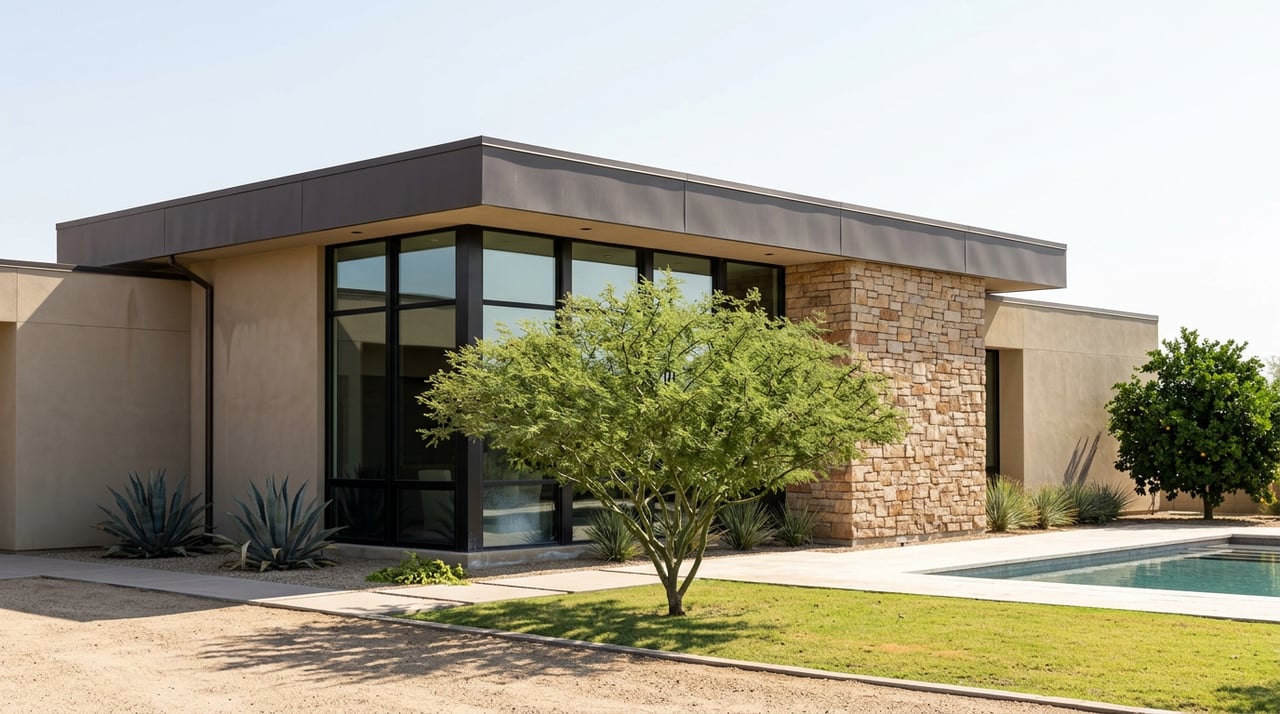
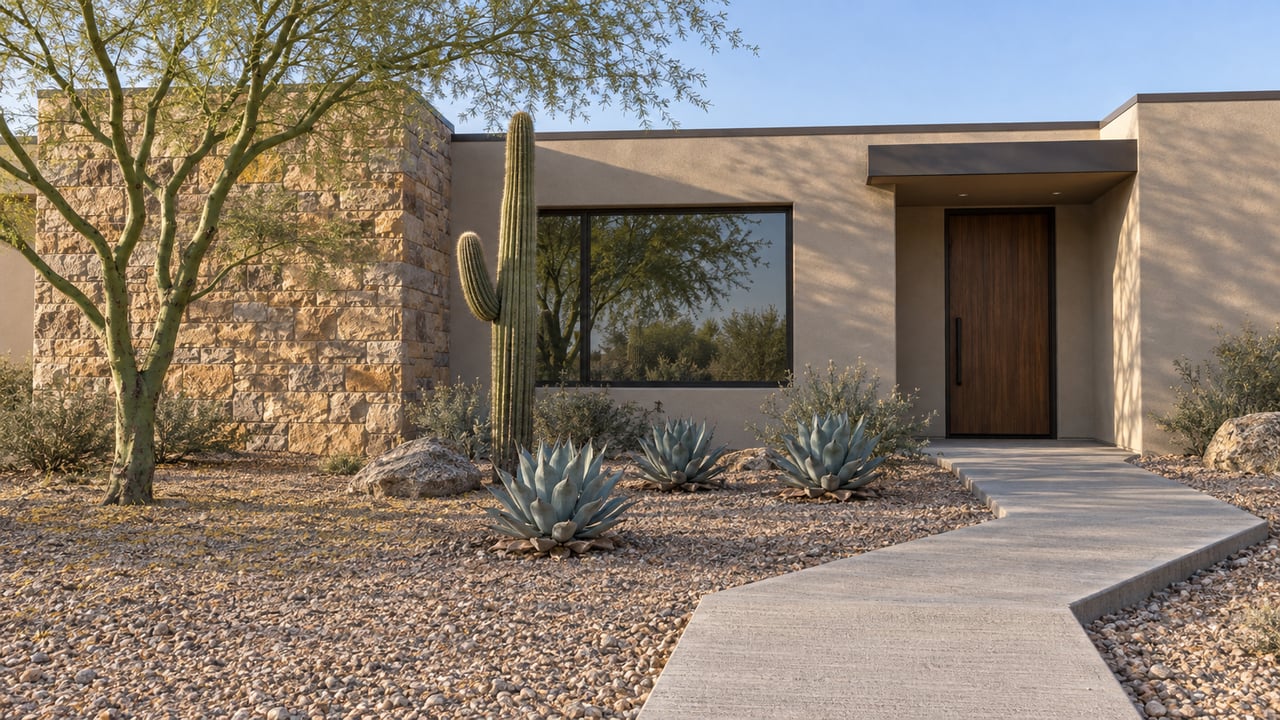
The neighborhood's own history explains why the tension is permanent rather than passing. Arcadia's postwar ranches, with their screen block walls, wide glass expanses, and low horizontal rooflines, were never a single tract development. Many were architect-designed one-offs built for a specific family on a specific lot, which is part of what preservationists at Modern Phoenix have spent years documenting and arguing for as the teardown pressure accelerates. That same distinctiveness is exactly what makes each Arcadia lot behave like its own micro-market instead of a comparable unit in a larger one.
Price-band data from Arcadia's 85018 single-family stock backs this up at a finer grain. Top-quartile homes, the true trophy and estate tier, were sitting around $4.995 million with roughly 77 days on market. Upper-quartile homes averaged closer to $2.4875 million and moved faster, around 45 days. Lower-quartile inventory, near $1.6198 million, moved in about 49 days. The middle of the market clears fastest because it's easiest to comp. The top and bottom of the range, where dirt value and trophy architecture dominate the price, take longer to find their buyer.
Metro-wide conditions add useful context without changing the local story. The Cromford Report, the data source most Phoenix agents actually track day to day, opened 2026 with its demand and supply index near 80, where 100 signals a balanced market. That reading points toward a buyer-favorable metro overall. Cromford's senior housing analyst Tina Tamboer described the moment as
"the best buyer opportunity we've seen in years"
but Arcadia has largely sat outside that trend. Prices in the 85018 corridor kept climbing through the first half of 2026 even as days on market stretched longer, which is exactly what you'd expect in a supply-constrained neighborhood where land itself, not just the house on it, is the scarce input.
If Arcadia's price floor feels out of reach, the next real estate conversation isn't a different neighborhood. It's a different ZIP code, one line over.
| Arcadia (85018) | One ZIP west (85008) | |
|---|---|---|
| Price, most recent full month | $1,545,000 median, June 2026 | roughly $378,780 typical value, June 2026 |
| Year-over-year change | up 1.8 percent | down about 1.1 percent |
| Share of sales closing below list | minority, sale-to-list averaging 95.1 percent | majority, about 63.5 percent of June sales |
| Character | citrus-lined streets, SRP flood irrigation, Camelback Mountain views | same citrus-lined streets, same mountain views, smaller lots |
The physical setting barely changes crossing that line. The pricing conversation changes completely. Buyers who start their search in Arcadia and find the entry point out of reach often end up writing offers a few blocks west, where sellers are negotiating on repairs, concessions, and price in a way that Arcadia sellers currently are not.
One more boundary inside Arcadia deserves attention before anyone falls in love with a listing photo. School zoning splits roughly at 56th Street. East of that line generally falls under Scottsdale Unified. West of it lands in Madison Elementary and Phoenix Union boundaries instead. Two homes on the same block, or even the same street at different addresses, can zone to different districts entirely. This is worth confirming for the specific parcel before writing an offer, not after closing.
Is Arcadia currently a buyer's market or a seller's market? It depends on which Arcadia you mean. Finished, well-priced homes in the middle of the range are still moving with seller leverage intact. Trophy estates and teardown-quality lots at the top and bottom of the range are taking longer to sell, which gives a patient buyer more room to negotiate there than the median suggests.
What's the real difference between Arcadia Proper and Arcadia Lite? Arcadia Proper generally carries the larger, flood-irrigated lots and the deepest concentration of original mid-century ranch stock. Arcadia Lite, closer to the western edge, tends toward smaller lots and a higher share of newer infill and renovation activity, which is part of why its sales volume and pricing swing more sharply from month to month.
How long does a teardown-to-rebuild project actually take in Arcadia? Beyond the 3.5 to 6 month rezoning window when it applies, expect the full process, design, permitting, and construction, to run 12 to 30 months depending on scope. That timeline should factor into any offer on a teardown-quality lot, not just the purchase price.
If you're weighing an Arcadia purchase against its edges, or trying to figure out whether a specific listing is really a dirt deal or a finished one, that's exactly the kind of lot-by-lot read Karen Abinet works through with clients across Phoenix and the Valley every week. Let's Connect.
This article is general information, not legal, tax or financial advice. Consult a qualified professional about your situation.
Stay up to date on the latest real estate trends.
Experience personalized service, expert negotiation, and proven results. Work with a trusted broker dedicated to helping you achieve your goals.